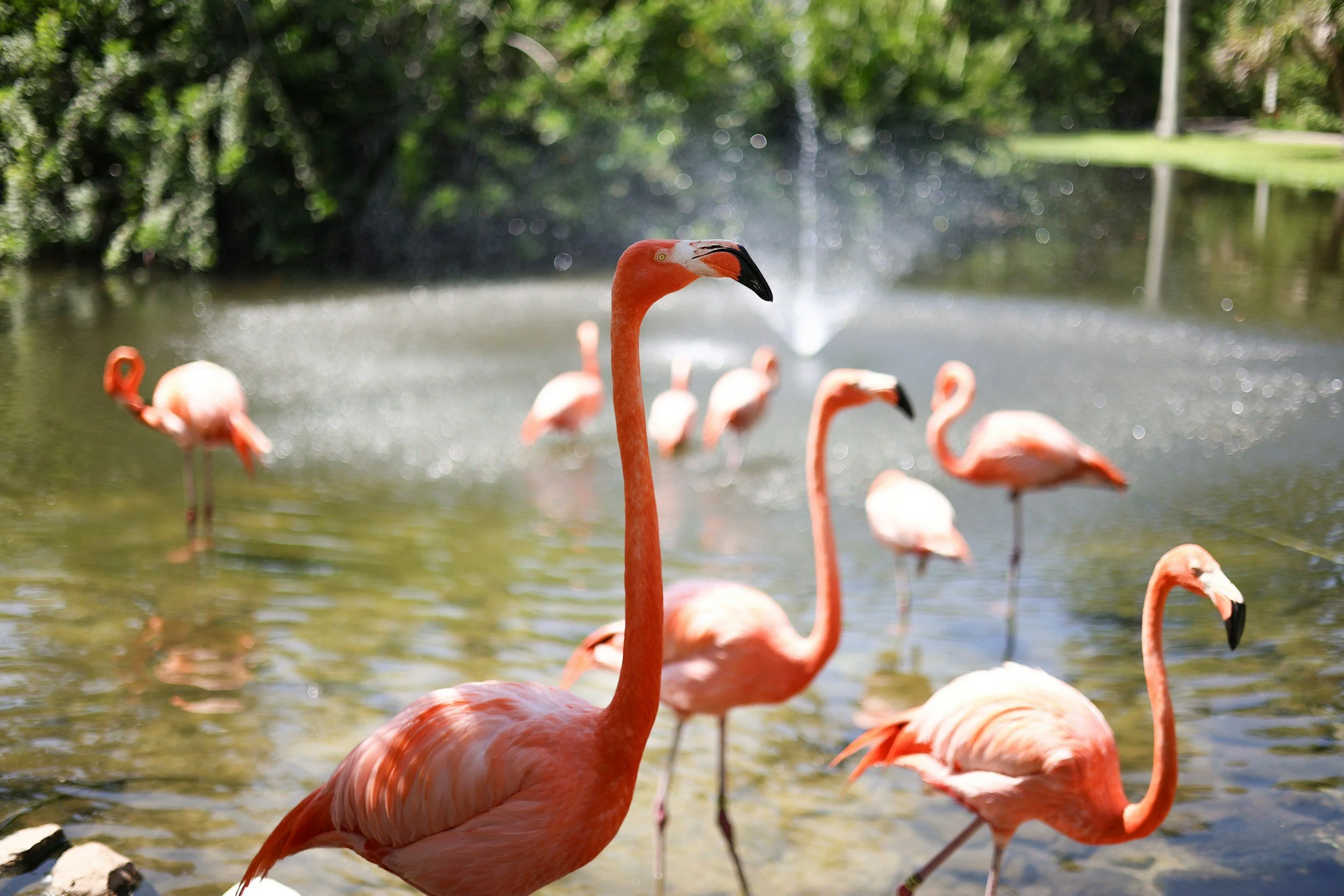
I’m often asked where the name Pink Flamingo Postpartum Care & Wellbeing came from. When I was thinking what to call my postpartum care practice, I wanted a name that reflected the reality of early motherhood: beautiful, demanding, and deeply transformative. It just so happens that flamingos offer a perfect metaphor for the postpartum period.
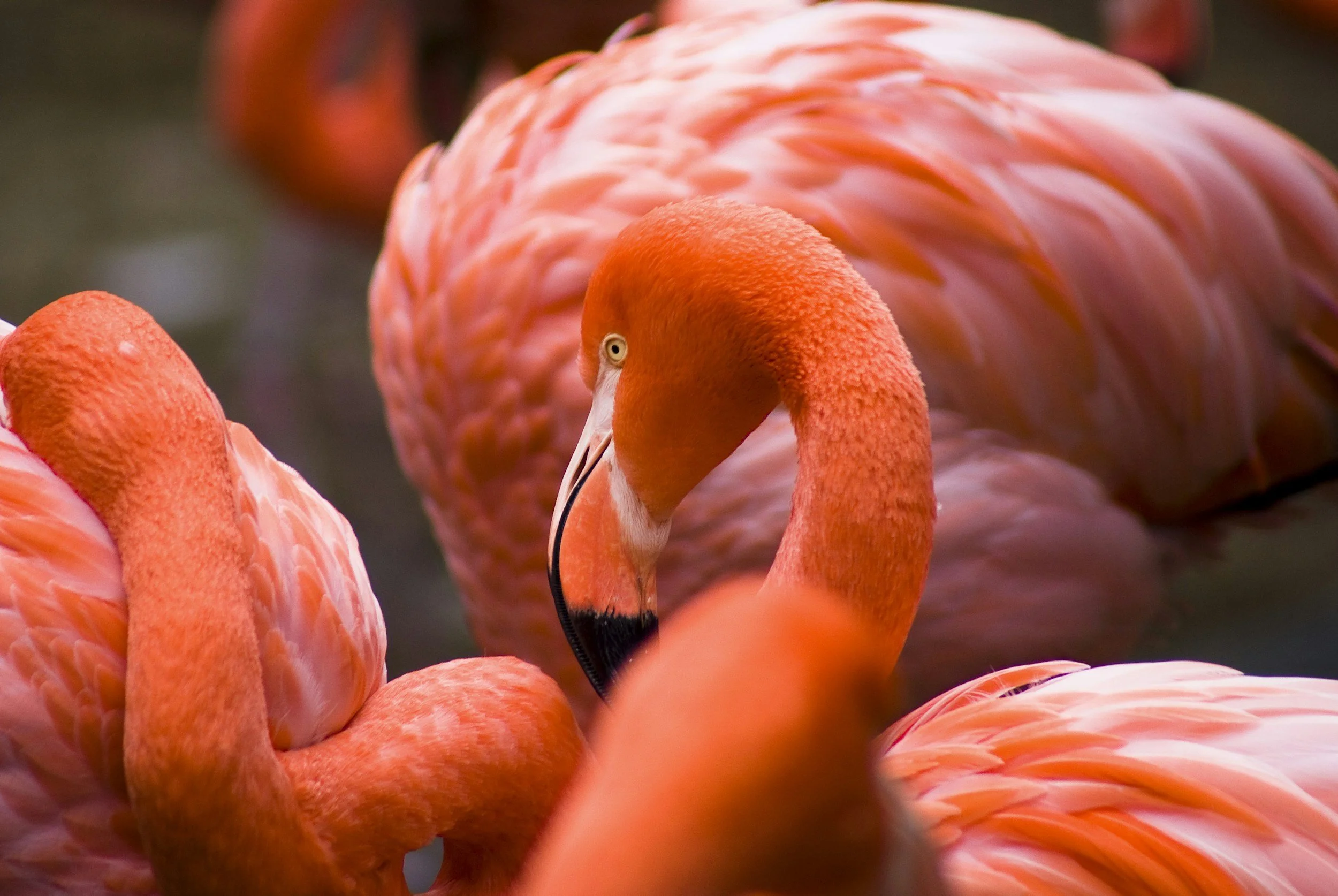
Close up of a vibrant pink flamingo
Apart from being a fabulous, vibrant and elegant bird, there’s another reason I chose the flamingo…
Flamingos aren’t naturally bright pink all the time. Their colour actually comes from their diet from crustaceans, algae and microorganisms that contain pigments called carotenoids. These pigments tint not just their feathers but their skin, fat and even their egg yolks.
Mama flamingos often lose their pink
Flamingos are at their most vibrantly pink during breeding season, when their colour helps attract a mate. But when chicks arrive, many female flamingos lose their bright colour.
Researchers believe this may be because those same carotenoids are being diverted into important physiological work, for example enriching egg yolks or producing the nutrient-rich secretions used to feed their chicks. In other words, the colour quite literally goes into raising their babies. During this intensive parenting phase, flamingos appear paler because so much of their energy and nutrition is being channelled into their young.
When I first learned this, it struck me how similar this is to the experience of many postpartum mothers.
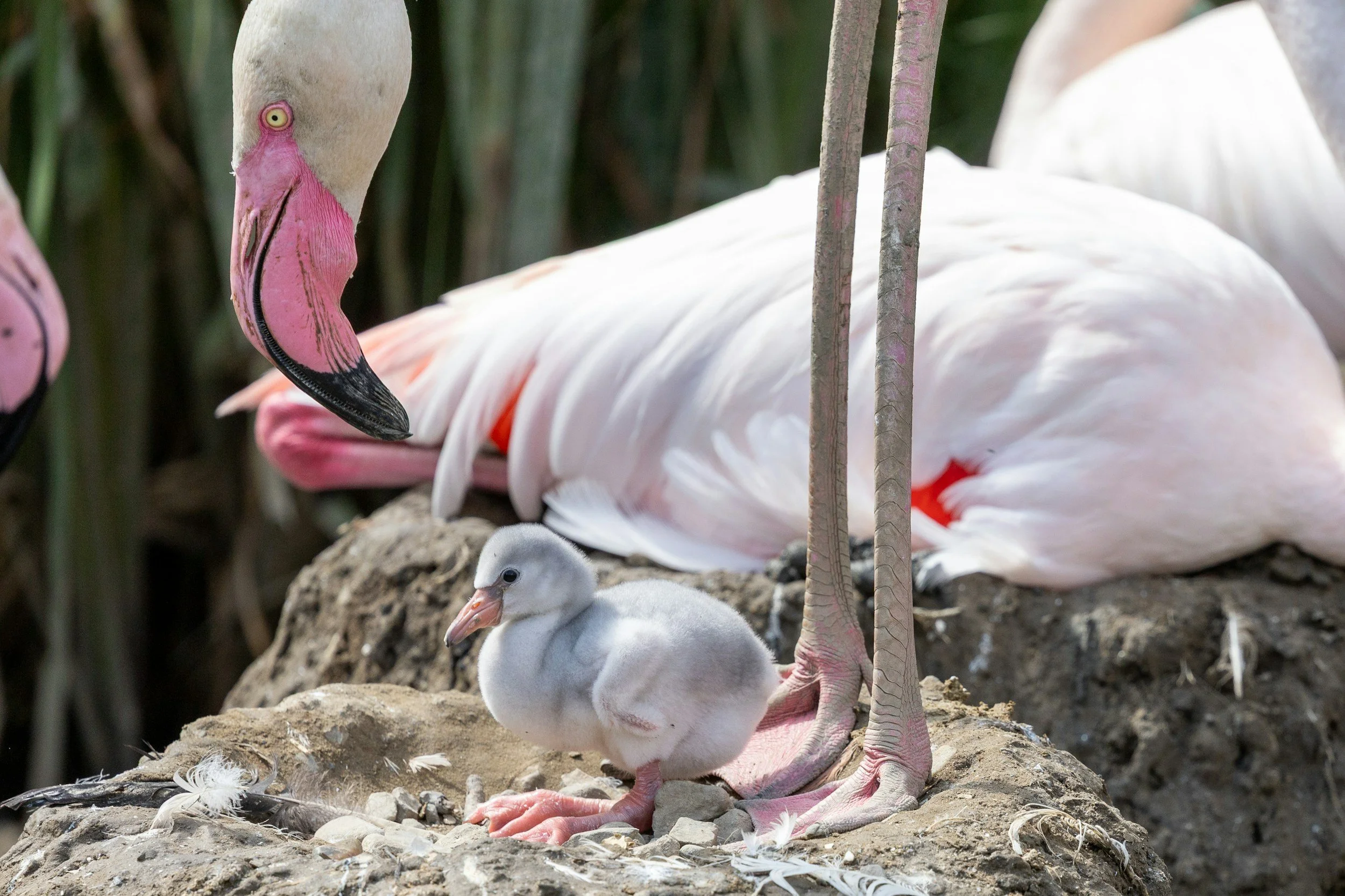
Grey flamingo baby with a white mother (who has lost her pink for now)
Just like new human mothers…
In the early months after a baby arrives, women are doing incredibly demanding and important work. They are feeding, nurturing, recovering, adjusting and often functioning on very little sleep. Like the flamingo, their energy is going somewhere vital. It is being poured into their baby.
But just as flamingos gradually regain their colour once their chicks grow and become less dependent on them, mothers too begin to find themselves again. Strength, energy and confidence returns. Often a new version of themselves begins to glow.
When I support women in the depths of new motherhood, exhausted and unsure if they will ever feel like themselves again, I remind them that this is a season. The colour comes back.
And that’s the meaning behind Pink Flamingo Postpartum Care & Wellbeing.
A few flamingo facts I love
A group of flamingos is called a flamboyance when they perform their dramatic mating dances (otherwise they’re simply called a stand).
Flamingos build their nests from mud, so there’s no expectation of keeping the house spotless during breeding season.
Flamingos are typically monogamous, and both parents share the work of raising their chick.
Both mother and father flamingos produce a nutrient-rich “crop milk” from glands in their throat to feed their chicks until they are ready to eat solid food.
There is something reassuring about a species where parenting is shared, the house is a little messy, and the parents look a bit less fabulous while they focus on raising their young.
Supporting women through pregnancy, postpartum and early motherhood is at the heart of what I do. If you're preparing for life with a new baby, or finding your footing in the months after birth, you can learn more about my offerings here.